One Red Crane, Two Geometric Planes: Why This Minimalist Prompt Works
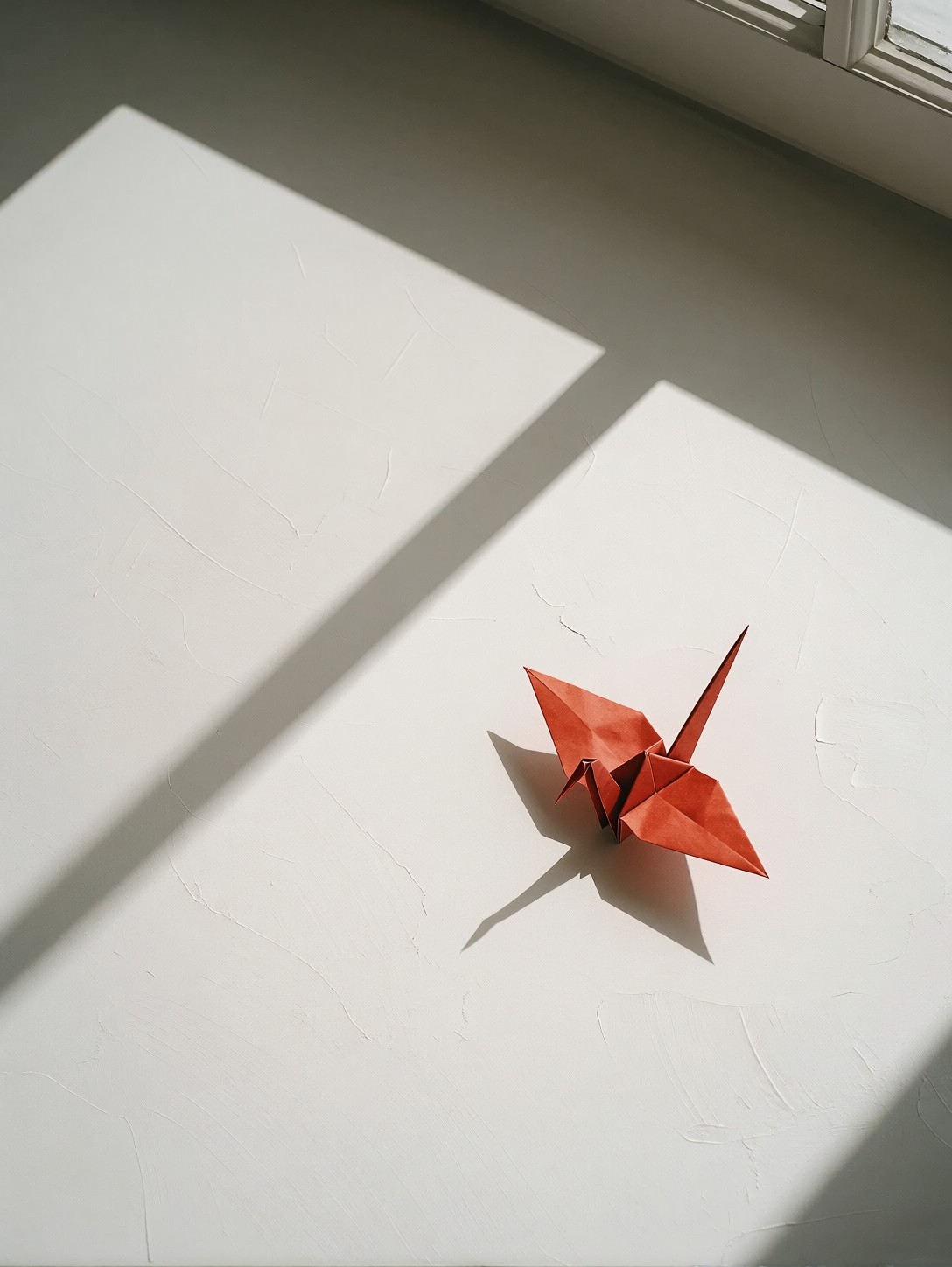
A single vermilion crane on an endless field of white plaster should be the simplest image imaginable — yet the diagonal shadow from an unseen window is what turns it into composition. That shadow splits the frame into two clean planes, giving the emptiness structure, while the crane's small soft shadow becomes the only texture in an otherwise silent scene. Proxima Aurelia 2 thrives on exactly this kind of restraint: it reads "generous negative space" and "clean edges" literally, resisting the urge to clutter the plaster with artifacts or noise. The palette does the rest — pure white, warm grey, and one saturated red that the eye cannot ignore. The result feels closer to a gallery photograph than a generated image 🖤
Wall Art, Editorial Spreads, and Brand Minimalism
Images built on negative space are disproportionately valuable: they leave room for text, titles, and layout. This prompt suits minimal art prints, magazine covers, contemplative social media posts, and design mockups where a quiet focal point matters more than detail.
Keep the top-down framing — it is essential to the graphic, flat quality. A 1:1 square (1024×1024) or vertical 3:4 crop both work; wide 16:9 formats dilute the tension between the two shadow planes and the crane.
Settings for Proxima Aurelia 2 — Precision Through Restraint
Aurelia 2 is built to extract breathtaking results from even the simplest prompts, which cuts both ways: it will faithfully render the emptiness you ask for, but any stray descriptive words will materialize as clutter. Keep the prompt lean and let the model's intelligent composition do the work.
- CFG / Guidance:
3.0–3.5— low enough to keep the plaster smooth, high enough to hold the crisp fold geometry - Steps: 30 for final quality; 12 for quick composition previews
- Resolution:
1024×1024for square gallery output, or1080×1440(3:4) for print-oriented framing
Resist adding extra objects "for interest" — in this style, the diagonal shadow and the crane's own shadow are the entire visual story. Two shadows, one subject, nothing else.
Five Ways to Push the Red Crane Further
5 Targeted Variations for This Minimalist Composition
- Swap the subject: Replace "red paper crane" with "red lacquered chopstick" or "single red maple leaf" — the vermilion accent survives, but the mood shifts from origami precision to organic imperfection
- Invert the palette: Change "red crane on white plaster" to "white crane on deep charcoal plaster" — the shadow planes become light planes, and the image turns nocturnal and stark
- Warm the light: Change "thin diagonal shadow" to "golden late-afternoon light through a paper screen" — the geometric austerity softens into a Japanese interior warmth
- Multiply deliberately: Change "a single red paper crane" to "three red paper cranes in a diagonal line" — repetition creates rhythm while keeping the negative space intact
- Add a hint of scale: Append "a faint seam line where two plaster planes meet" — introduces architectural context without breaking the emptiness
Two Prompts Ready to Generate
Both examples apply variations above directly, tuned for Aurelia 2's strengths at the settings recommended earlier.
Variation: inverted palette — the same top-down composition flipped into a dark, stark nocturnal version
Minimalist Art. A single white paper crane resting on a vast expanse of smooth deep charcoal plaster, viewed from directly above. A thin diagonal beam of pale light falls across the frame from an unseen window, cutting the composition into two clean geometric planes. The crane's crisp folds cast one small soft shadow, the only texture in the emptiness. Palette of charcoal, cool grey, and bone white. Flat, quiet, meditative mood, generous negative space, clean edges, high contrast, highly detailed, 8k.
Variation: repeated subjects with warm light — three cranes in rhythm, softened by paper-screen glow
Minimalist Art. Three red paper cranes in a diagonal line resting on a vast expanse of smooth white plaster, viewed from directly above. Golden late-afternoon light through a paper screen casts a thin diagonal shadow, cutting the composition into two clean geometric planes. Each crane's crisp folds cast a small soft shadow, the only texture in the emptiness. Palette of pure white, warm grey, and vivid vermilion. Flat, quiet, meditative mood, generous negative space, clean edges, high contrast, highly detailed, 8k.
More Minimalist and Compositional Prompts
These prompts explore the same territory of restrained composition, bold color accents, and architectural negative space: