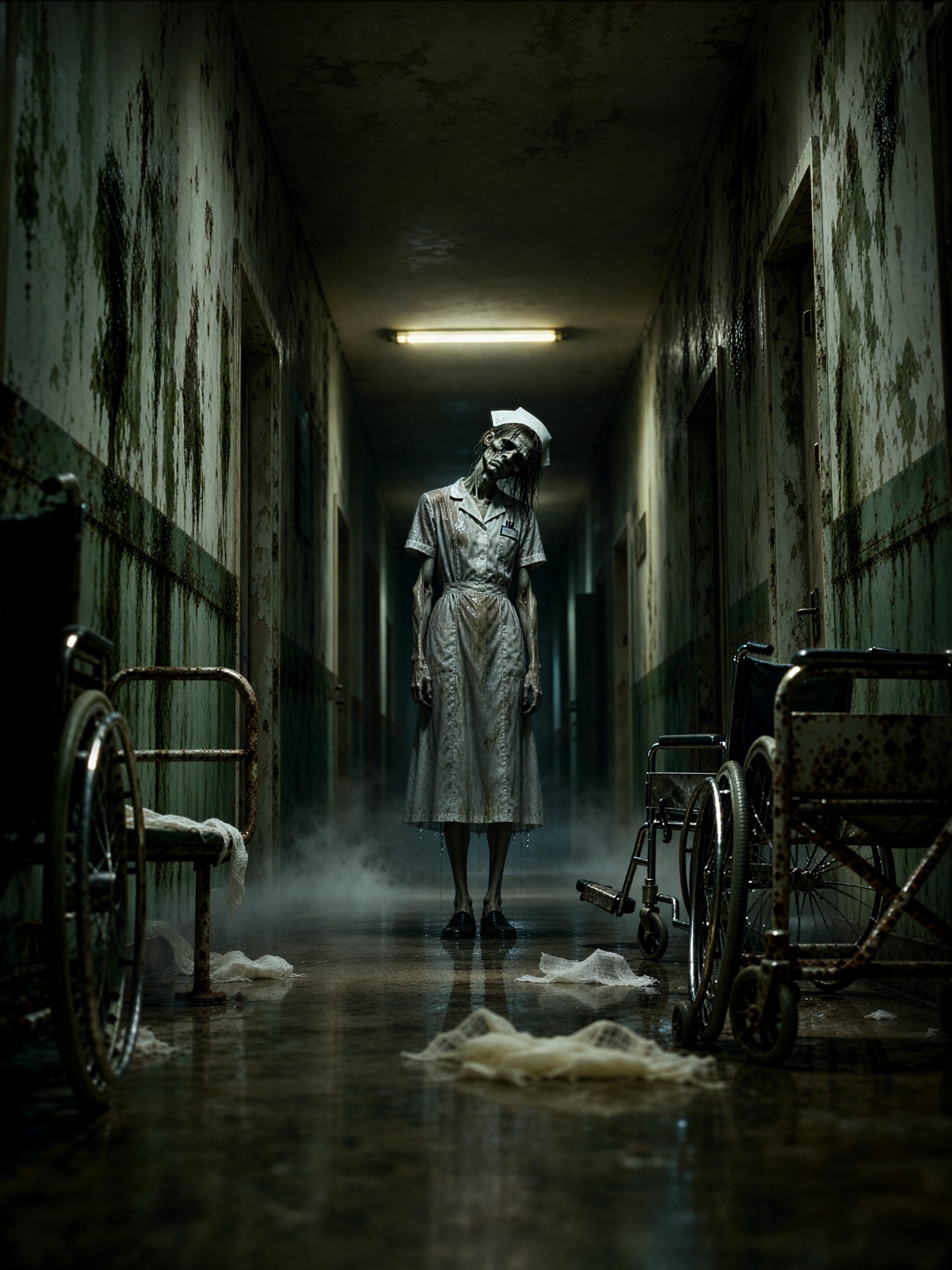
One Flickering Tube, One Still Figure: Anatomy of a Corridor Nightmare
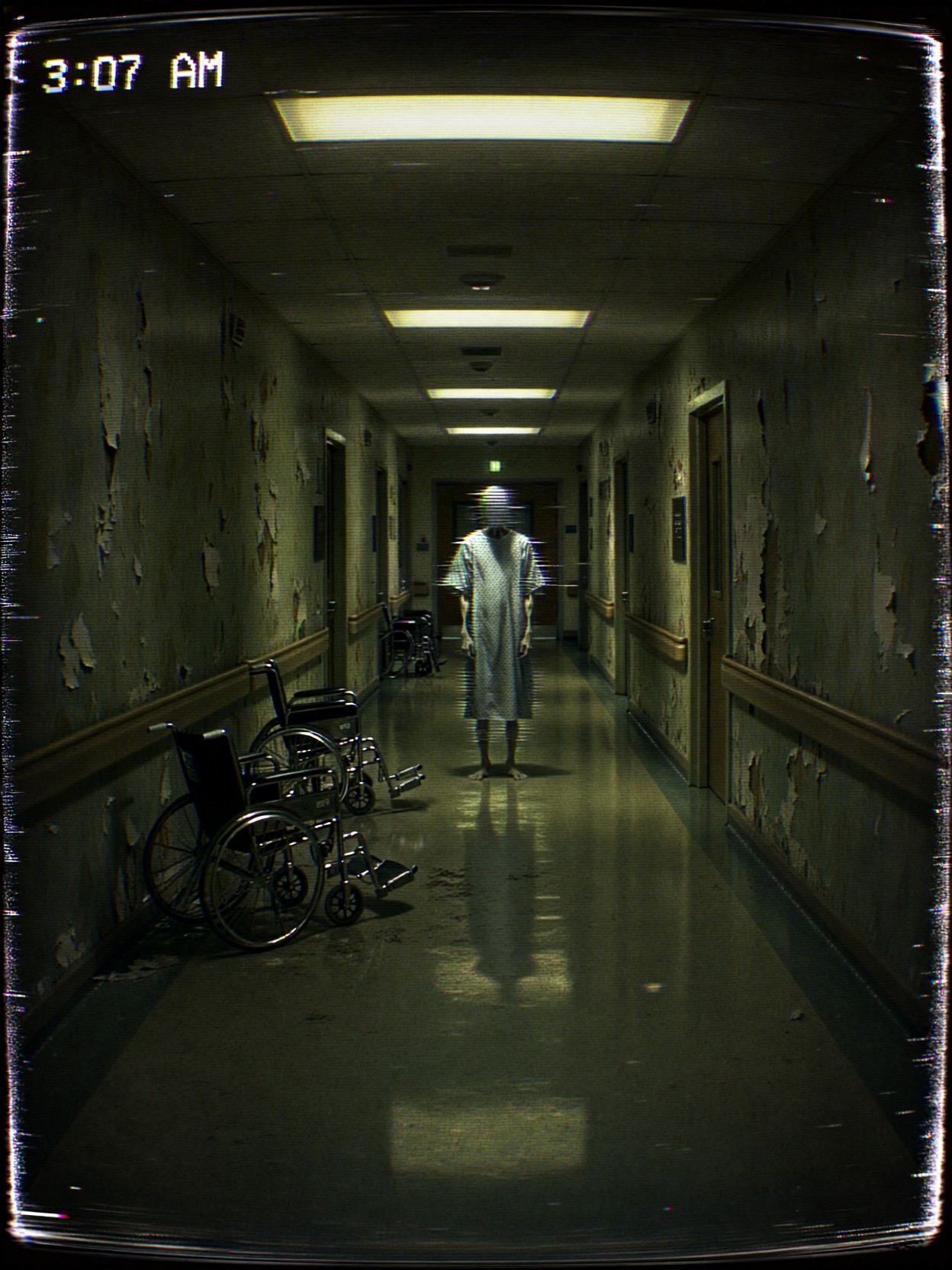
The scariest element here is not the drowned nurse — it's the lighting logic. A fluorescent tube that "stutters" forces the model to alternate pools of sickly yellow against near-darkness, and Qwen 2.1 handles that inconsistency beautifully, rendering each flicker band with its own falloff on the rusted wheelchair frames below. The figure itself works because everything about it is wrong but quiet: matted hair instead of a face, a tilted head instead of a pose, water-soaked fabric instead of movement.
The prompt's restraint pays off. Thin floor fog, green-black damp stains, and a desaturated teal-bone-grey palette build dread through texture rather than gore — cinematic realism that reads like a frame from a slow-burn horror film.
Film Stills, Game Loading Screens, and Cover Art
Anything that needs a single, story-dense frame benefits here: horror novel covers, indie game key art and loading screens, creepypasta illustrations, and found-footage-style thumbnails. The low handheld angle and 35mm language make the output feel like a still lifted from footage, which is exactly the register found-footage projects need.
Stick to 16:9 cinematic framing (1664×928 or native 2K wide). The long receding corridor is the composition — cropping square kills the depth and the sense that the figure is far away. This prompt is not suited to cheerful or children's-facing contexts; the imagery is deliberately unsettling.
Dialing In Qwen 2.1 for Dark Cinematic Realism
Qwen 2.1's native 2K output and lifelike portrait lighting are the reasons this prompt lands — the model resolves wet fabric sheen and fluorescent falloff without extra hand-holding. Keep guidance moderate so the darkness stays moody instead of crushing to black.
- CFG / guidance:
3.5— preserves the desaturated palette; pushing higher can over-brighten the yellow flicker zones - Steps: 30 for final quality (fog gradients and grain need the full run); 12 for composition previews
- Resolution:
1664×928for 16:9, or native 2K wide for maximum corridor depth - Keep "grainy atmosphere" in the prompt — Qwen 2.1 renders film grain convincingly, and it masks any over-clean AI smoothness in the shadows
Qwen 2.1's crisp typography means you can add a rusted wall sign like "WARD C" or a peeling evacuation notice and it will render legibly — a cheap way to add narrative depth.
Five Ways to Push the Sanatorium Further
5 Targeted Variations for This Horror Corridor Prompt
- Close the distance: Change "at the far end" to "three meters from camera, out of focus" — shallow depth of field now blurs the threat itself, which reads as far more aggressive
- Flood the corridor: Replace "thin fog pooling" with "ankle-deep black water reflecting the flickering light" — doubles the drowned-nurse theme and adds mirror symmetry
- Flip the palette: Swap "teal, bone grey and sickly yellow" for "emergency red backup lighting, deep black shadows" — instantly shifts from decayed quiet to active catastrophe
- Add typography: Insert "a flickering wall sign reading WARD C in peeling paint" — exploits Qwen 2.1's text rendering and grounds the location
- Reverse the power dynamic: Change the lone figure to "a row of identical nurses standing shoulder to shoulder across the corridor" — stillness multiplied becomes a wall, not a watcher
Two Prompts Ready to Generate
Both examples apply the variations above at the Qwen 2.1 settings recommended earlier — one closes the distance, one multiplies the threat.
Variation: close the distance — the nurse now looms near the lens, blurred by shallow focus, turning dread into imminent threat
Horror, cinematic realism. Dim abandoned sanatorium corridor at midnight, walls peeling with green-black damp stains. A gaunt figure in a water-soaked vintage nurse uniform stands three meters from camera, out of focus, face hidden by matted hair, head tilted unnaturally. Flickering fluorescent tube, rusted wheelchairs, thin floor fog. Teal, bone grey, sickly yellow palette. 35mm lens, low handheld angle, shallow depth of field, heavy film grain, highly detailed, 8k, 16:9
Variation: typography plus multiplied threat — a legible WARD C sign and a row of identical nurses blocking the corridor
Horror, cinematic realism. Abandoned sanatorium corridor at midnight, peeling green-black damp walls, a flickering rusted sign reading "WARD C". A row of identical gaunt nurses in water-soaked vintage uniforms stands shoulder to shoulder across the far end, faces hidden by matted hair, heads tilted at odd angles. Stuttering fluorescent light, scattered gauze, thin fog. Desaturated teal and sickly yellow, 35mm lens, low handheld angle, film grain, highly detailed, 8k, 16:9
More Corridors and Cold Figures
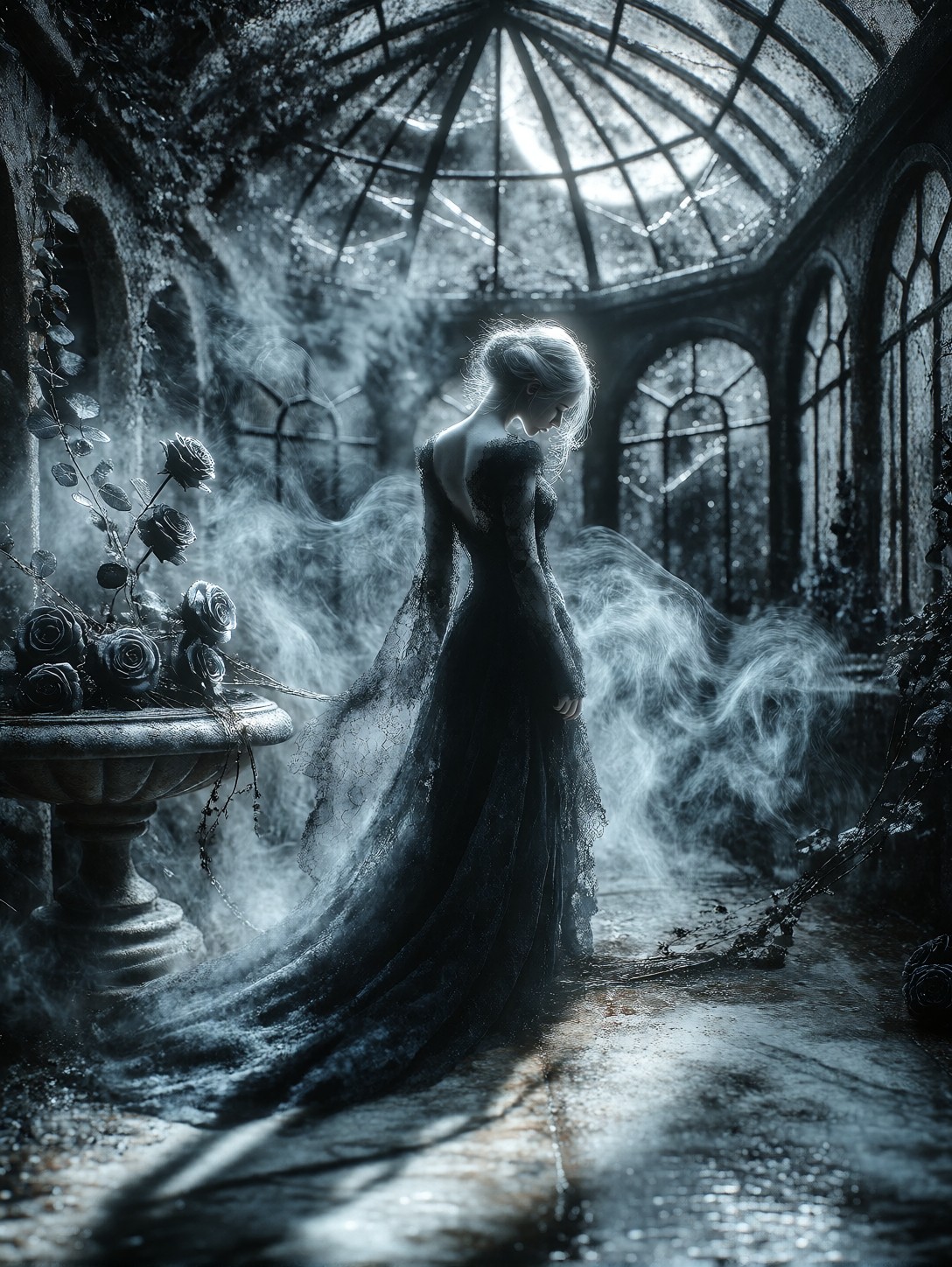
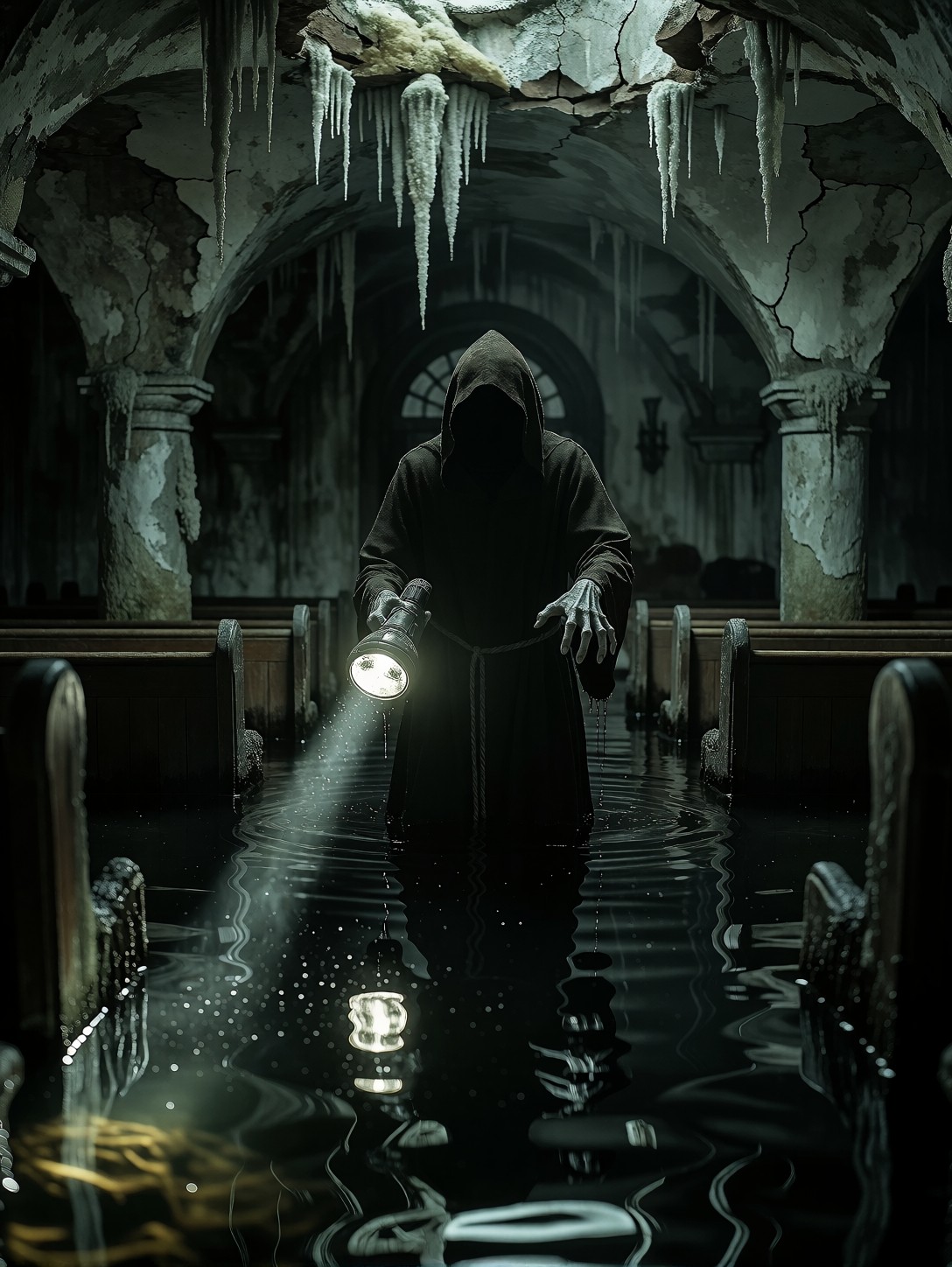
These prompts explore the same territory of still figures and hostile architecture — flooded chapels, lace-draped ghosts, and hallways where the clock has stopped: