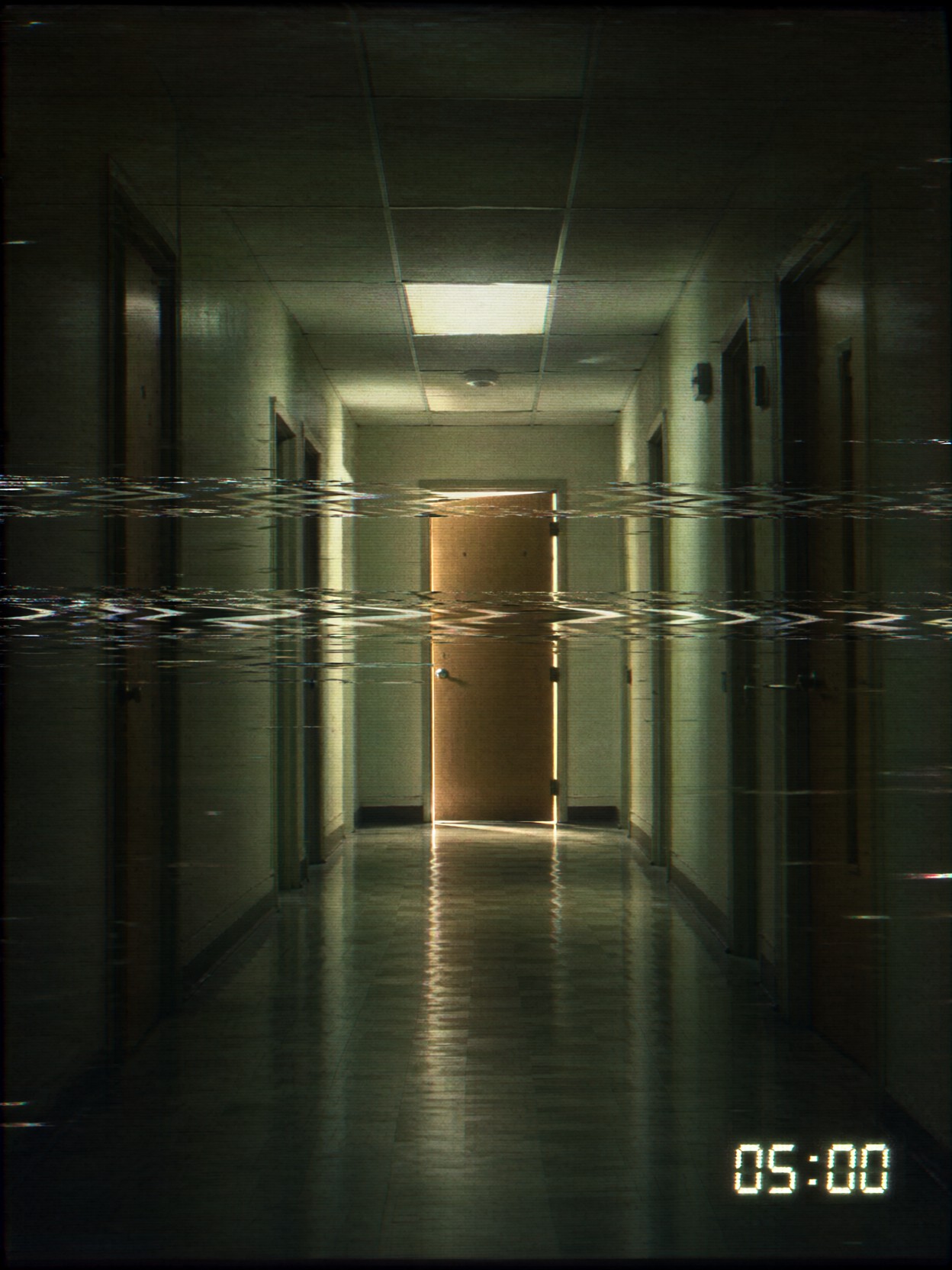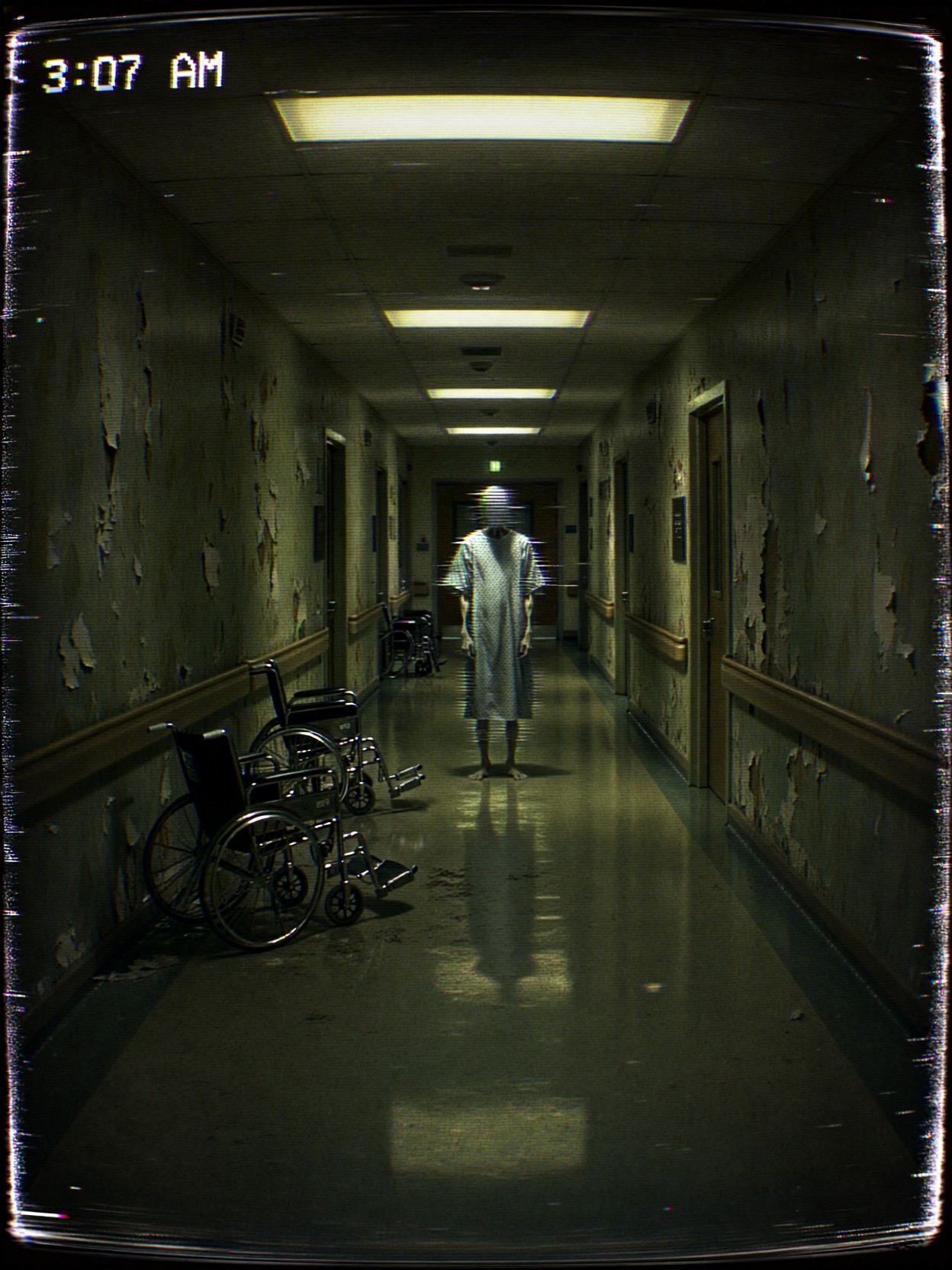
Scan Lines, Glitched Timestamps, and the Figure at 3:07 AM
The scariest detail here isn't the figure — it's the glitching timestamp. Analog horror lives in the degradation layer: tracking errors, chromatic aberration, tape warping at the frame edges. Qwen 2.1 is unusually good at this because it renders intentional imperfection with the same precision it applies to fine detail — the static noise looks like real tape damage, not random pixel mush.
The sickly green-yellow fluorescent light is what sells the 1980s security camera look, and the overturned wheelchairs give the empty corridor a sense of interrupted story. The tall figure's face being "obscured by scan lines" is the key move — Qwen's crisp detail engine will keep the silhouette razor-sharp while the face stays unreadable, which is far creepier than a visible face.
Horror Shorts, ARGs, and Creepypasta Thumbnails
Found-footage stills like this are the backbone of analog horror series, YouTube ARGs, and creepypasta thumbnails — the 4:3-ish surveillance framing reads instantly as "recovered footage." Landscape orientation works best here: 16:9 or even a square-ish CCTV crop. Avoid tall portrait ratios; security cameras don't shoot vertical.
One limitation to respect: the low-resolution aesthetic means fine facial detail is deliberately suppressed — don't expect usable clean portraits from this style. It's atmosphere-first output.
Settings for Qwen 2.1 — Getting the Tape Damage Right
Qwen 2.1's native 2K output and crisp typography handling matter a lot here: the glitching corner timestamp is essentially integrated text, and this model renders it legibly distorted rather than garbled.
- CFG / Guidance:
3.0–3.5— higher values clean up the grain and kill the analog feel - Steps: 30 for maximum tape-warp fidelity; 12 for fast composition previews
- Resolution:
1664×928(16:9) for the surveillance framing, or1280×960(4:3) for a period-accurate CCTV look - Negative prompt: "clean, sharp, modern, HDR, vibrant colors" — push back against the model's natural tendency toward polish
Counterintuitive tip: because Qwen 2.1 excels at fine detail, explicitly keeping "low resolution, static noise, tracking error" in the prompt is what stops it from over-restoring the image into a clean render.
Five Ways to Push the Corridor Deeper Into Nightmare
5 Targeted Variations for This Analog Horror Prompt
- Move the figure closer: Change "at the far end" to "ten feet from the camera, leaning slightly toward the lens" — proximity transforms unease into threat
- Timestamp escalation: Replace "3:07 AM" with "timestamp flickering between 3:07 AM and 88:88" — impossible time reads as reality breaking down
- Second presence: Add "a second identical figure barely visible inside an open doorway mid-corridor" — duplication is a classic analog horror escalation
- Swap the era: Change "1980s hospital" to "1990s school hallway, children's drawings taped to the wall" — institutional dread with a more personal gut-punch
- Go square for authenticity: Add "4:3 aspect ratio, interlaced fields, date stamp reading SEP 14 1987" — the older format makes the footage feel like a real recovered tape
Two Prompts Ready to Generate
Both examples apply variations above directly — tuned for Qwen 2.1 at the settings recommended above.
Variation: impossible timestamp escalation — the clock itself becomes the anomaly, shifting the horror from the figure to the footage
Analog horror, VHS found-footage still. Grainy security camera view of an empty 1980s hospital corridor, timestamp flickering between 3:07 AM and 88:88 in the corner. Flickering fluorescent lights cast sickly green-yellow tones over peeling wallpaper and overturned wheelchairs. A tall thin figure in a rumpled patient gown stands motionless at the far end, face obscured by scan lines. Tracking error, chromatic aberration, static noise, tape warping, low resolution, highly detailed.
Variation: proximity threat — the figure is now close to the camera and leaning in, converting distant unease into immediate danger
Analog horror, VHS found-footage still. Grainy security camera view of a 1980s hospital corridor at 3:07 AM, glitching timestamp. A tall thin figure in a rumpled patient gown stands ten feet from the camera, leaning slightly toward the lens, face obscured by scan lines and distortion. Flickering fluorescent lights, sickly green-yellow tones, peeling wallpaper, overturned wheelchairs behind it. Mild tracking error, chromatic aberration, static noise, tape warping, low resolution, highly detailed.
More Found-Footage Dread in This Direction
These prompts explore the same degraded-tape territory from other angles — mirrored reflections, empty institutional spaces, and figures caught where they shouldn't be: