
Bleached Horror and Vast Corridors: The Brightest Kind of Terror
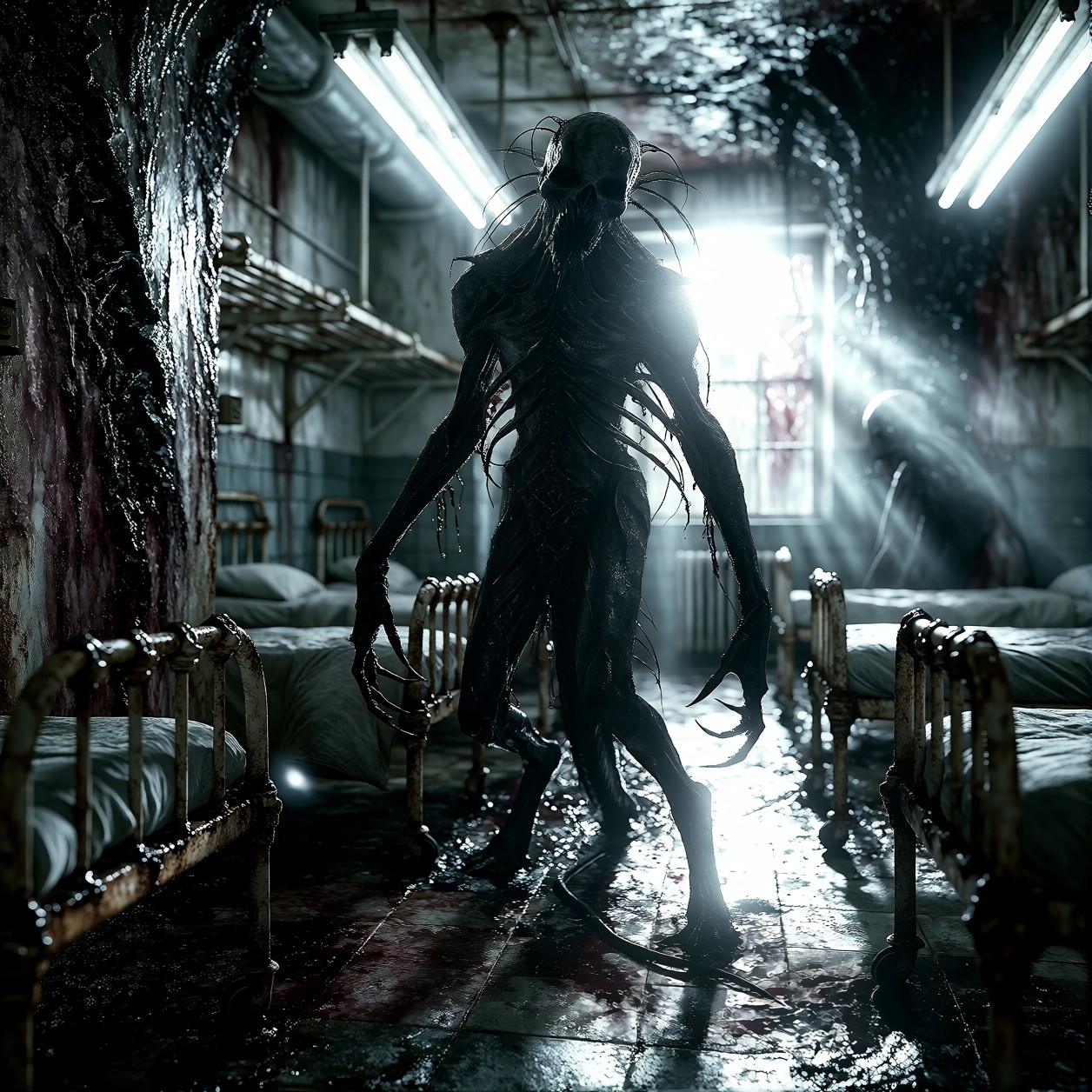
There is nothing more unsettling in horror than a room with nowhere to hide — where blinding fluorescent tubes erase every shadow and leave only the wet, slick details of corruption exposed. This prompt weaponizes "overdriven daylight-white" light to create that sense of clinical vulnerability. Instead of relying on darkness to scare you, it forces the viewer to stare at rusted iron beds and dripping tar residue under an uncompromising glare.
Proxima Aurelia 2 is the ideal engine for this because its core strength lies in rich visual storytelling and intelligent composition. Rather than simply blowing out the highlights into a white blob, the model understands the aesthetic intent of the bright light. It renders the "stretched, slick-wet skin" of the creature with distinct textural fidelity, ensuring the horror remains visceral even under high-exposure conditions.
Concept Art for Liminal Spaces and Body Horror
Vast, shadowless hospital corridors are a staple of "Backrooms" aesthetics and liminal space photography. This image works exceptionally well as concept art for psychological horror games, editorial illustrations about medical anxiety, or album covers for industrial metal bands.
Because the prompt relies on the word "vast," you should shoot in landscape orientation. A 16:9 aspect ratio gives the rusted beds and walls room to recede into the distance, selling the feeling of being lost in a massive, blinding institution.
Settings for Proxima Aurelia 2 — Controlling the Glare
When rendering bright horror scenes, the biggest risk is losing detail in the highlights. Because Proxima Aurelia 2 prioritizes aesthetic storytelling, it can sometimes lean into "beautiful" lighting that softens the horror. You need to lock the details in.
- CFG / Guidance:
3.0–3.5— keep this moderate. If you push it too high, the "searing lighting" will turn into an unrenderable white wall. Lower values preserve the details in the rust and skin. - Steps: 28–34 steps — this high-exposure scene has a lot of competing textures (tar, wet skin, rust). You need the model to iterate long enough to distinguish them clearly.
- Resolution:
1664×928(16:9) — wide and cinematic, perfectly matching the "vast ward" description.
Applying the LoRA
The Obsidian Nightmare Horror Style is a heavy stylistic filter. It dictates the "oppressive tension" and the specific look of the "distorted humanlike figures."
- Weight: 1.0 (100)
- If you find the distortion too extreme, drop it slightly to
0.85, but for a true nightmare scenario, keep it at maximum.
Five Ways to Push This Bright Horror Further
5 Variations on the Corrupted Ward Theme
- Shift the subject: Remove the creature and focus entirely on the environment. "Endless rows of rusted iron beds, dark tar residue dripping from the ceiling tiles, blinding fluorescent glare" — this creates a lonely, liminal space without immediate threat.
- Sickly lighting shift: Change "daylight-white fluorescent tubes" to "flickering sickly green overhead lights." This shifts the mood from clinical exposure to toxic contamination.
- Add victims: Instead of a lone monster, prompt "a group of panicked teenagers running down the corridor toward the camera." The bright lighting makes the panic feel inescapable and raw.
- Biomechanical twist: Add "flesh growing over the metal beds, veins pulsing under the harsh light." This leans into body horror, making the building itself feel infected.
- Fisheye perspective: Add "wide angle fisheye lens looking up at the fluorescent tubes." This distorts the architecture and creates a sense of claustrophobia despite the vastness.
Two Prompts Ready to Generate
The following prompts apply two of the variations above, optimized for Proxima Aurelia 2's aesthetic strengths and the full Obsidian Nightmare LoRA.
Variation: Endless liminal corridor — removes the monster to focus on the vast, rusted beds and oppressive architecture
Obsidian Nightmare Horror Style. Endless rows of rusted iron hospital beds stretching into the distance, vast empty ward with blinding daylight-white fluorescent tubes overhead eliminating all shadows, walls dripping with dark tar-like residue, hyper-exposed cinematic lighting, raw oppressive dread, wide angle shot, 8k resolution
Variation: Biomechanical infection — replaces standard rust with flesh growing over metal, turning the building into a monster
Obsidian Nightmare Horror Style. A corrupted hospital ward where flesh has grown over the metal beds and walls, veins pulsing under harsh, blinding fluorescent glare, distorted humanlike creature with stretched skin standing in the center, wet organic textures, hyper-vivid environmental detail, razor-sharp focus
More Corrupted Environments to Explore
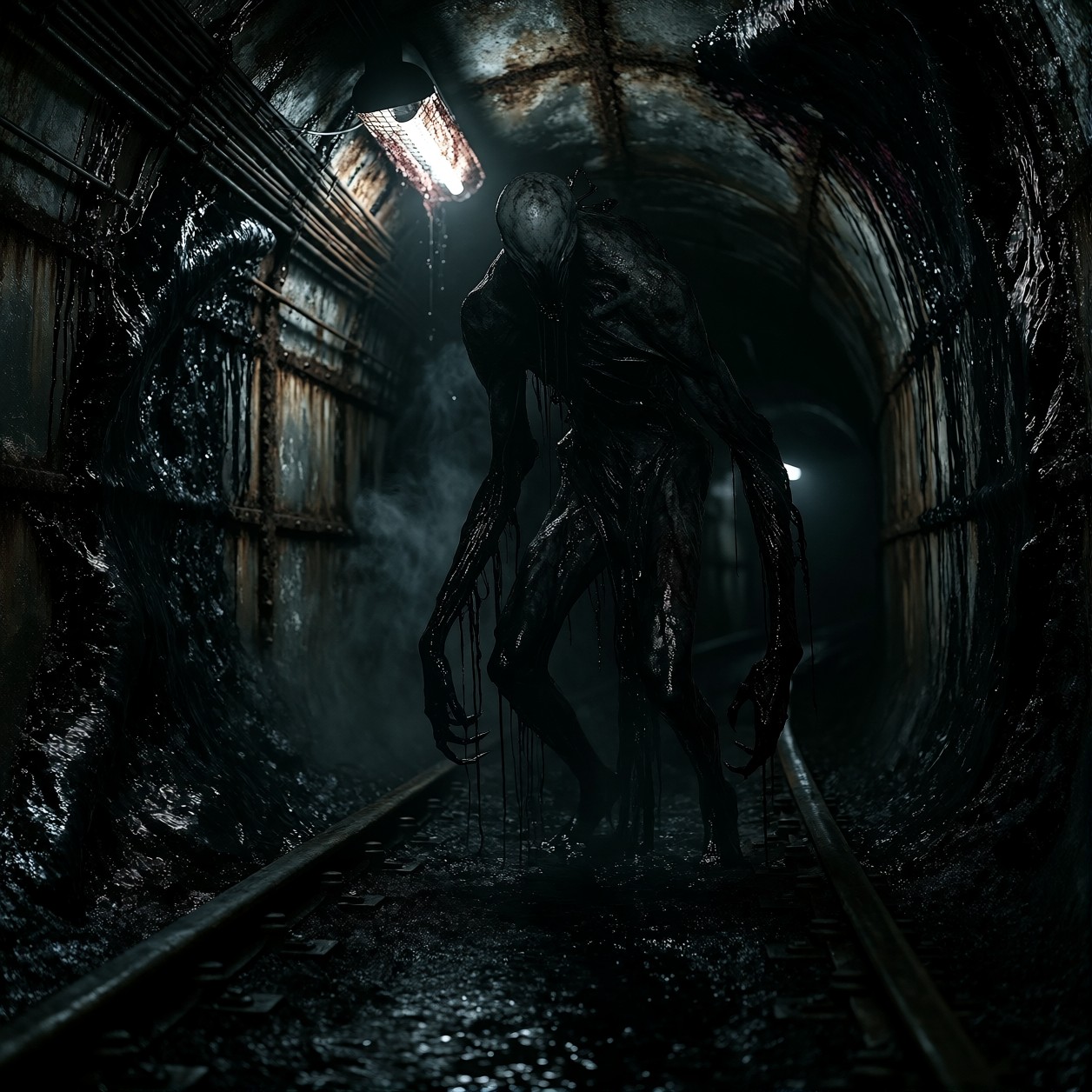
If you enjoy the tension of these bright, oppressive spaces, these related prompts push the horror into dark basements and subway tunnels: