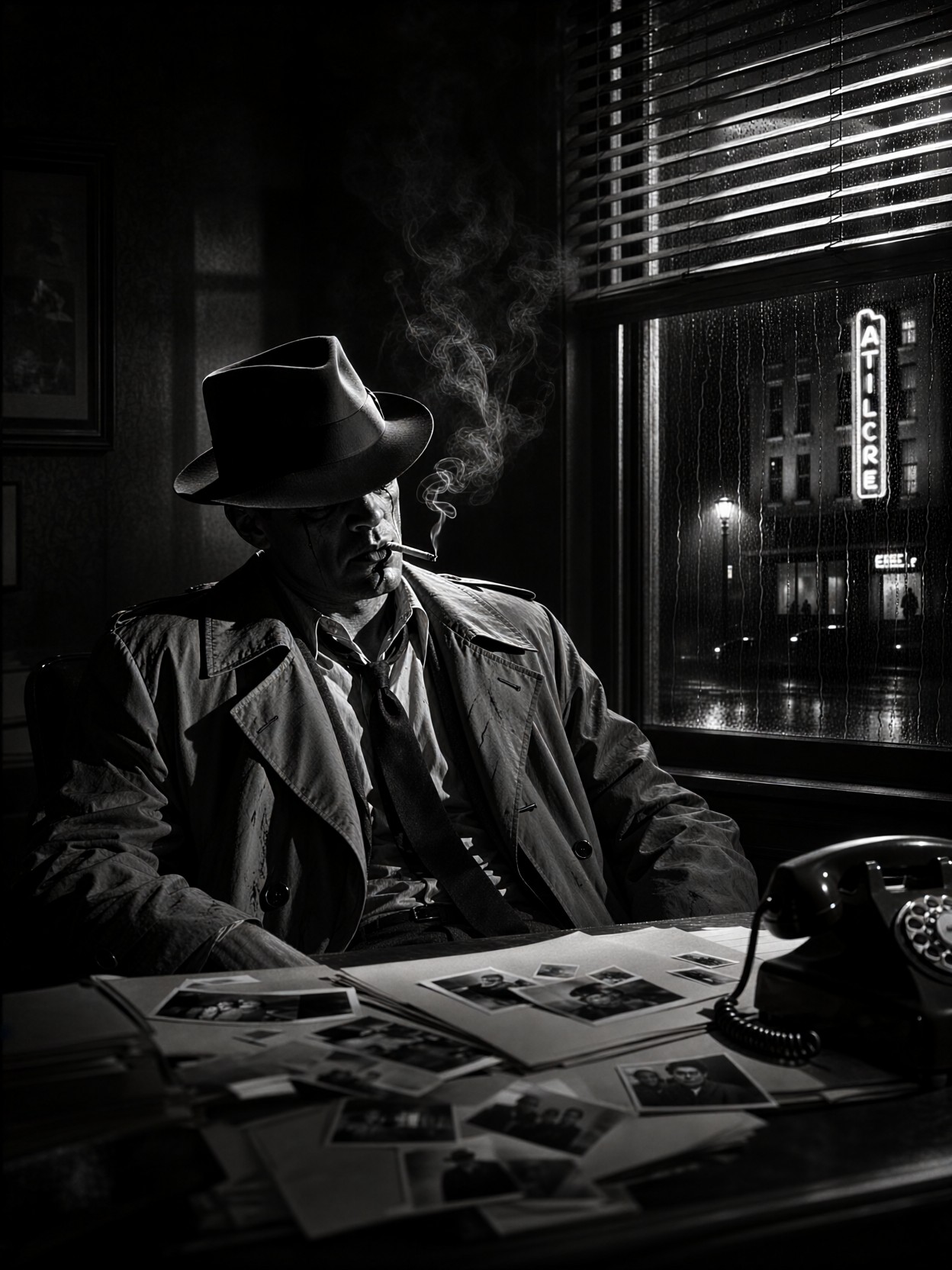
One Shaft of Light, a Thousand Shadows: Anatomy of a Noir Still
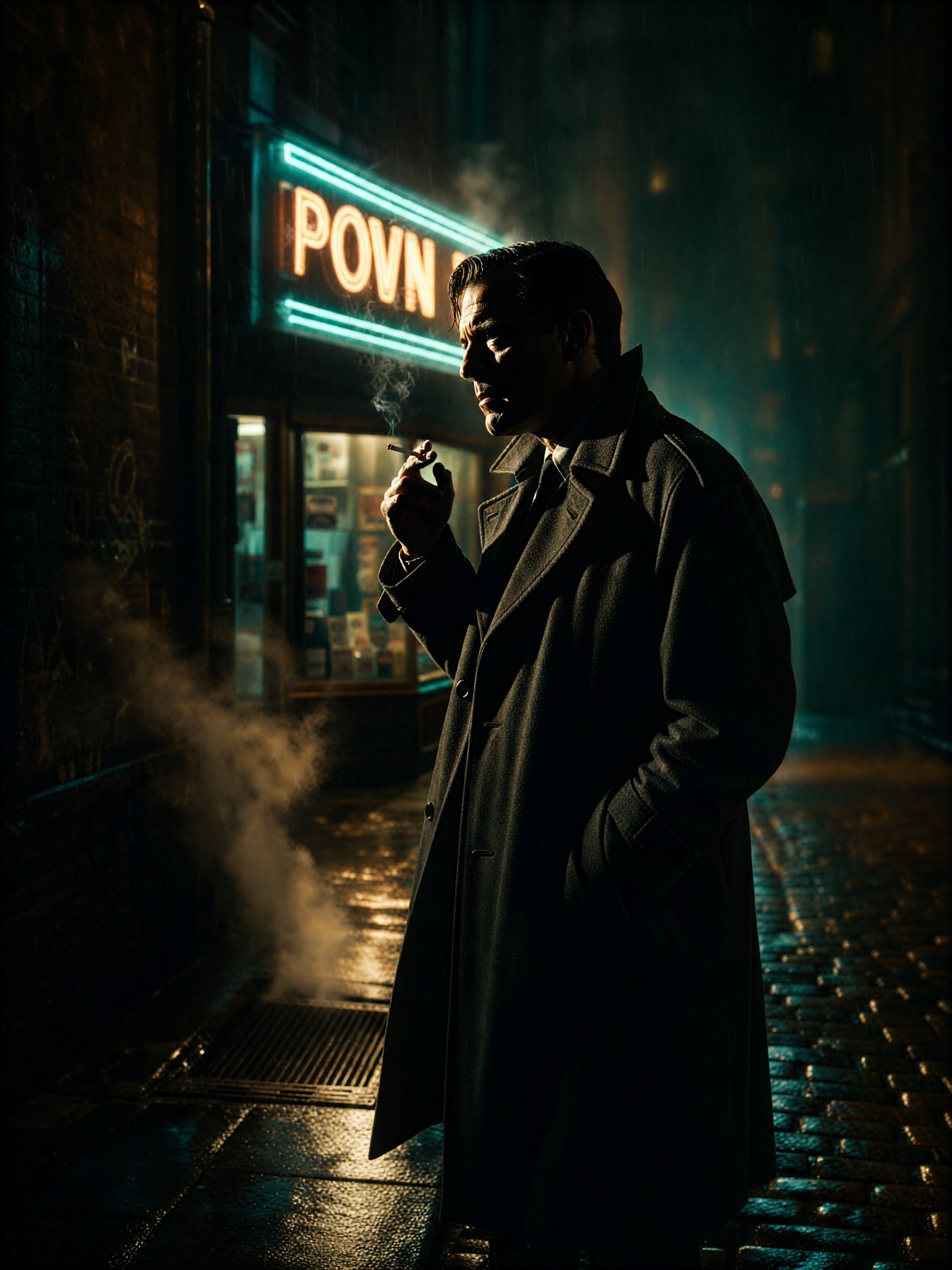
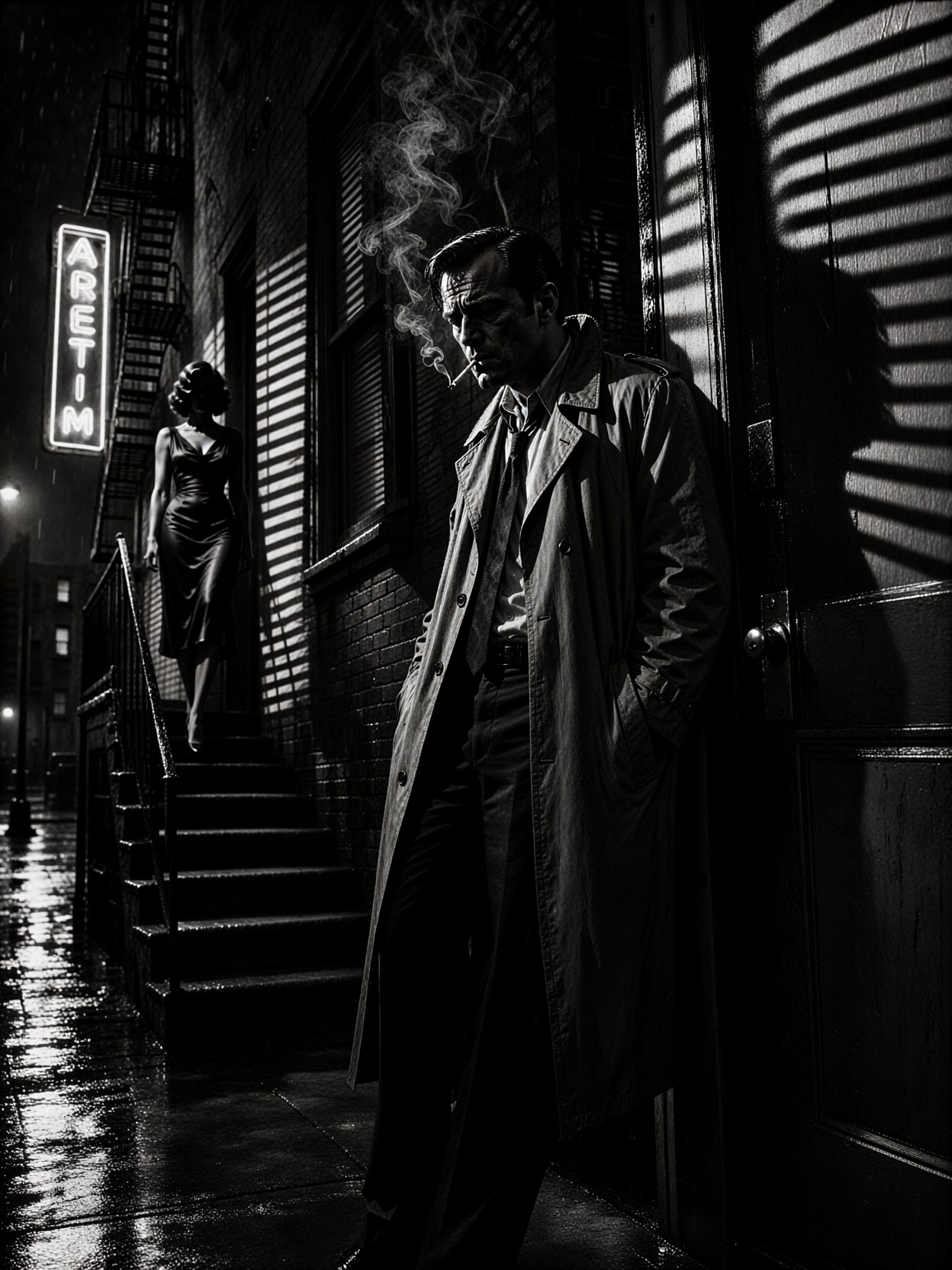
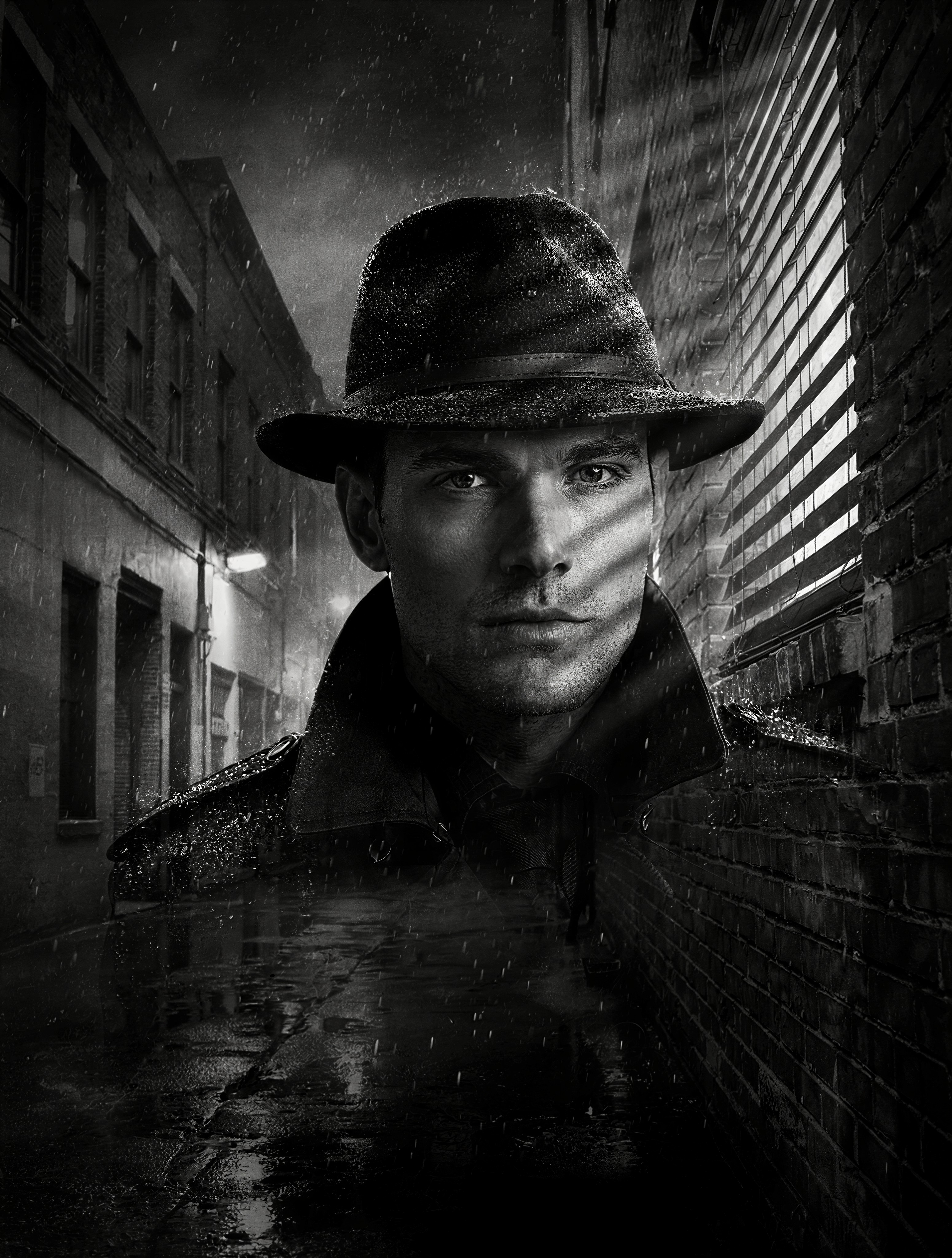
Venetian blinds do more than cover windows in this prompt — they are the entire lighting design. That single shaft of slatted light cutting through cigarette smoke is the signature of 1940s cinematography, and Qwen 2.1 renders it with the kind of directional precision that makes chiaroscuro work: hard edges between light and dark, smoke catching the beam, everything else swallowed by shadow.
The prompt layers its darkness deliberately. Rain on the window, neon reflections from a distant hotel sign, a rotary phone and grainy case files — each element reinforces the mood without competing for light. Qwen 2.1's strength in lifelike portrait lighting keeps the detective's weary face readable inside the gloom, while its detail handling preserves the texture of the rumpled trench coat and scattered photos.
Where This Noir Scene Earns Its Keep
Book covers for crime fiction and hardboiled thrillers, film festival posters, podcast cover art for true crime shows, and mood-setting keyframes for storyboard pitches all fit this image naturally. The medium shot keeps the subject grounded at desk level — intimate but not claustropic.
The prompt is written for a horizontal or square frame. The window, the shaft of light, and the desk spread need lateral room; a tight 3:4 portrait crop will amputate the blind shadows that make the composition. Aim for 16:9 or 4:3 and let the darkness breathe.
Dialing In Qwen 2.1 for High-Contrast Monochrome
Qwen 2.1 generates natively at 2K resolution and handles fine detail without upscaling tricks — useful here, where grainy photos on the desk and film-like texture could easily turn to mush on weaker models.
- CFG / Guidance:
3.0–3.5— high-contrast scenes clip highlights fast; lower guidance keeps the smoke and neon reflections soft rather than blown out - Steps: 30 for final quality; 12 for quick composition checks of where the light shaft falls
- Resolution:
1664×928(16:9 cinematic) or1216×832(3:2) — both keep the blinds and window composition intact
Noir lives or dies on shadow detail. If your first render crushes the blacks too hard, add "subtle shadow detail in dark areas, film grain" — Qwen 2.1 responds well to light-direction instructions phrased as scene description.
Five Ways to Reshoot This Scene
5 Concrete Changes for a Different Noir Mood
- Flip the era's palette: Replace "black-and-white" with "Technicolor noir, saturated reds and greens" — suddenly it's 1950s Douglas Sirk territory, neon bleeding colour into every shadow
- Change the light source: Swap "venetian blinds" for "flickering desk lamp only" — the composition tightens into an interrogation-room pool of light, blinds gone, intimacy replaced with claustrophobia
- Add a second figure: Insert "a mysterious woman in a dark coat silhouetted in the doorway" — instant narrative tension, the frame becomes a story beat instead of a character study
- Move the camera: Change "medium shot" to "extreme low angle from the desk surface" — files loom in the foreground, the detective towers against the window, and the power dynamic of the frame shifts entirely
- Modernize the props: Replace "rotary phone" with "a payphone handset dangling off the hook" and the case files with "a single manila envelope, unopened" — fewer props, more ominous implication
Two Prompts Ready to Generate
Both examples below apply variations from the list above, tuned for Qwen 2.1's native 2K cinematic output.
Variation: Technicolor palette swap — same detective and office, but 1950s saturated colour replaces monochrome for a warmer, more sinister mood
Technicolor film noir cinematic still. A weary private detective in a rumpled trench coat slumped at a dim office desk, fedora low, cigarette smoke curling through a shaft of light from venetian blinds. Rotary phone, scattered case files. Rain streaks the window, neon hotel sign reflecting saturated reds and greens into the room. Low-key chiaroscuro lighting, deep shadows, 35mm lens, medium shot, moody 1950s atmosphere, highly detailed, 8k
Variation: second figure added — a silhouette in the doorway turns the character study into a story beat, with a single desk lamp as the only light
Black-and-white cinematic film noir still. A weary private detective in a rumpled trench coat sits at a dim office desk lit only by a flickering desk lamp, fedora low, cigarette smoke rising. A mysterious woman in a dark coat silhouetted in the doorway. Grainy case photos and an unopened manila envelope on the desk. Rain streaks the dark window, distant neon reflection. Low-key chiaroscuro, deep shadows, 35mm lens, medium shot, moody 1940s atmosphere, highly detailed, 8k
More Rain and Shadow in This Category
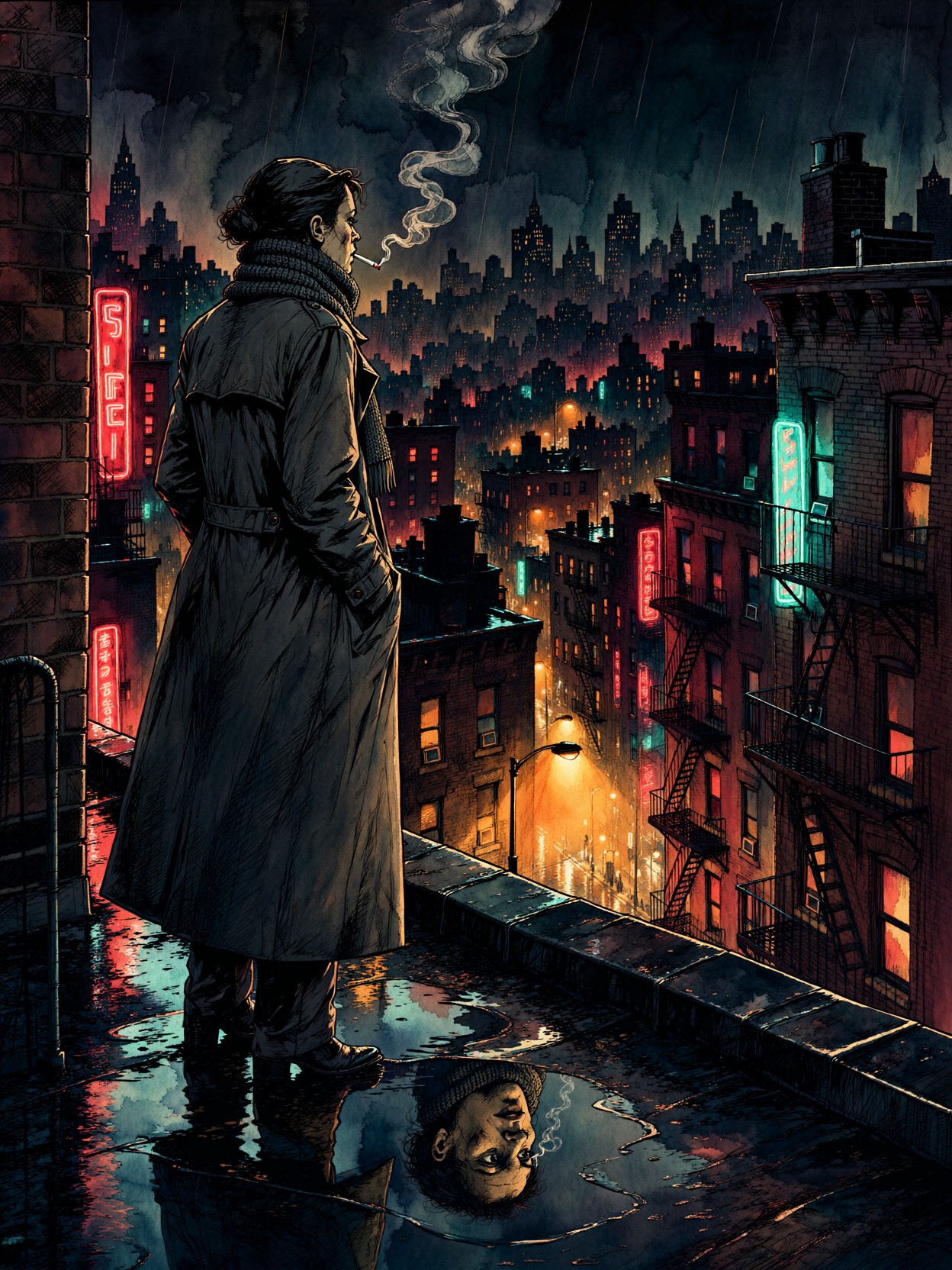
These prompts push the same hardboiled atmosphere from other angles — alley encounters, rooftop standoffs, and deeper mystery: