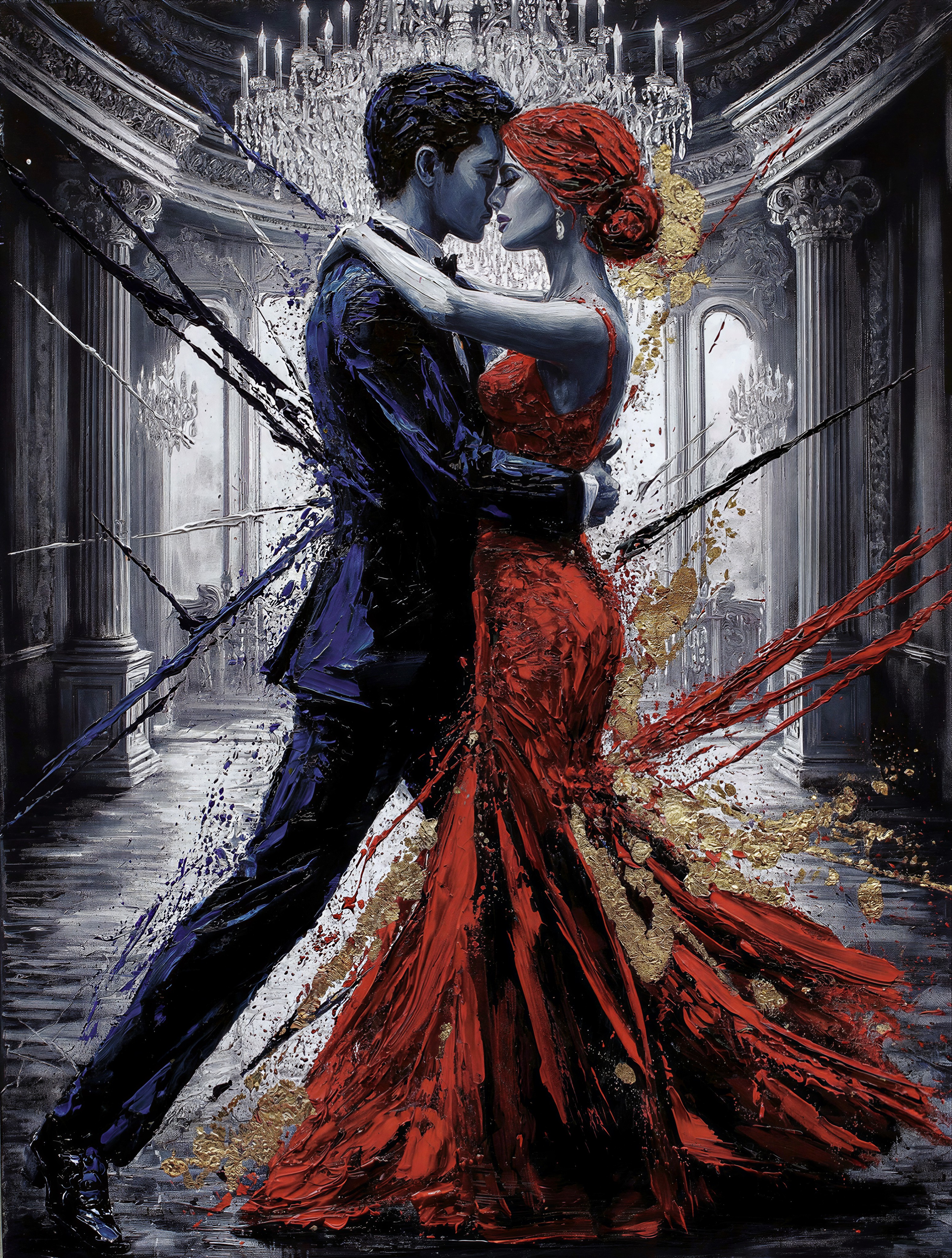


Chaotic Textures and Emotional Energy: The Ballroom's Explosive Waltz
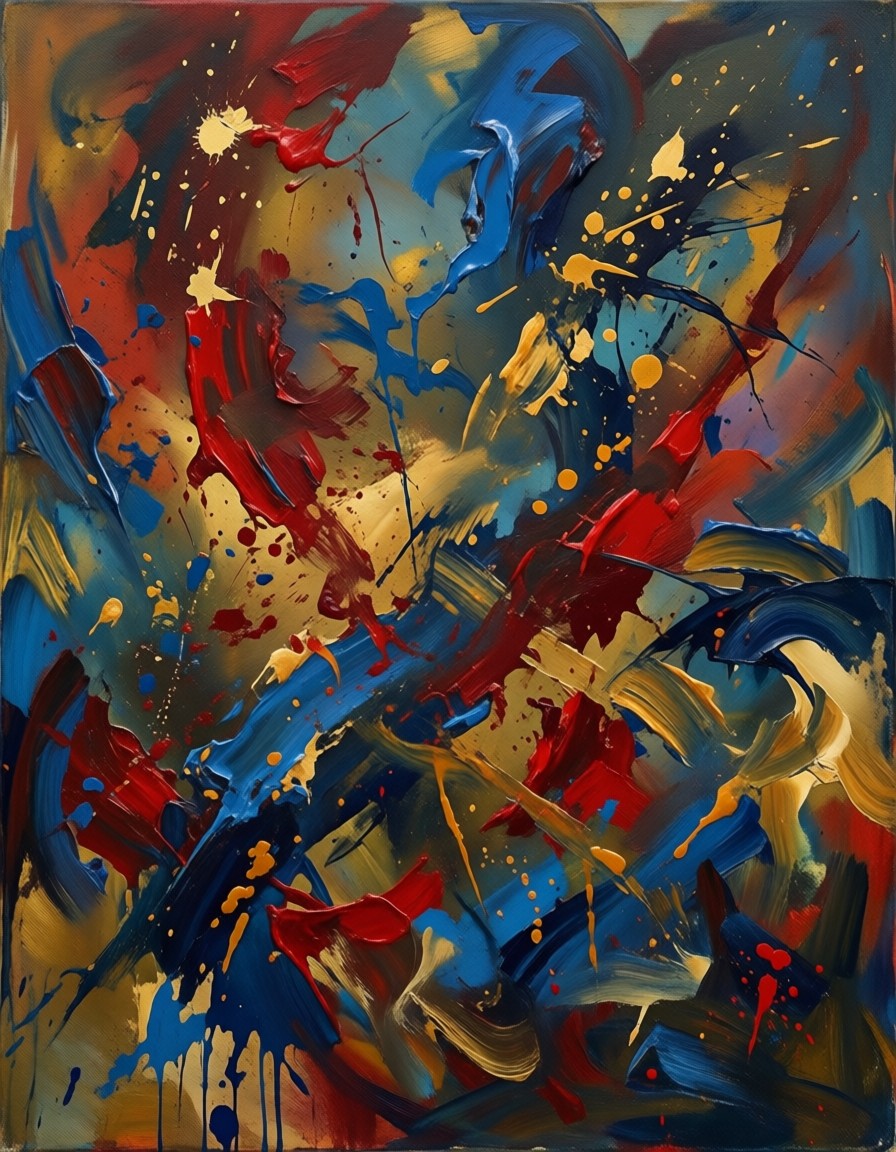
Thick, jagged palette knife strokes tear through the canvas like a storm — deep indigo and crimson swirl around a ghostly dancing couple, their forms barely distinguishable beneath the chaos. Ideogram 4 renders the canvas grain as a visible texture, making the painting feel like a physical object rather than a digital creation. Gold leaf splatters catch the light like shattered chandeliers, while explosive lines of fragmented columns suggest a ballroom in violent transformation.
The contrast between the couple's silhouettes and the shattered background creates a visual push-pull: the figures are almost erased by the texture, yet their presence is felt through the way the paint flows around them. This is not a static scene — it's a living, breathing explosion of color and movement.
Gallery Art, Digital Murals, and Conceptual Design
Artists seeking high-detail abstract expressionism for gallery exhibitions or digital murals will find this prompt particularly powerful. The texture-heavy approach works exceptionally well for large-format prints where the canvas grain becomes a visual element. For digital use, the 8k resolution ensures the painting retains its complexity at any scale.
Use a 16:9 landscape aspect ratio to fully contain the explosive background elements without cropping the dancing couple. Portrait orientation would compress the fragmented columns into visual noise.
Settings for Ideogram 4 — Balancing Detail and Chaos
While Ideogram 4 excels at photorealistic detail, its text rendering capabilities also handle abstract textures exceptionally well. For this prompt, prioritize texture resolution over text clarity:
- CFG / Guidance:
4.0–4.5— maintains texture definition without over-saturating the colors - Steps: 30–40 for full impasto texture; 12 steps for quick composition previews
- Resolution:
8192×4320(16:9) — preserves the 8k detail requested in the prompt
At cfg 4.2 and 35 steps, Ideogram 4 resolves the gold leaf splatters without bleeding them into the background — keep those values for maximum texture clarity.
Texture Layering Tips
- Palette Knife Thickness: Use
0.6–0.8weight for visible brushstroke definition; lower weights smooth the texture into a more impressionistic style - Gold Leaf Intensity:
0.3–0.5weight for subtle highlights; raise to0.7+for full metallic dominance
Combining both at 0.6 creates a balance — the gold accents remain distinct without overpowering the deep indigo and crimson.
Five Ways to Transform This Abstract Ballroom
5 Targeted Variations for This Prompt
- Replace the couple: "Lone figure in motion" — shifts focus from partnership to individual emotion, the texture becomes more introspective
- Change the palette: "Deep emerald, molten bronze, and shattered sapphire" — transforms the mood from dramatic to celestial
- Alter the setting: "Desert dunes under a blood-red sunset" — replaces ballroom chaos with natural landscape abstraction
- Adjust texture: "Thin washes of paint with visible brushstrokes" — softens the aggressive palette knife approach
- Reframe the dance: "Salsa rhythm, vibrant magenta and electric blue" — shifts the cultural context and color energy
Two Prompts Ready to Generate
Apply two of the variations above directly — both are optimized for Ideogram 4 at the settings recommended above.
Variation: Lone figure, celestial palette — replaces dancing couple with solitary figure, changes color scheme to emerald and sapphire
Abstract expressionism style, heavy texture oil painting. A dynamic, chaotic interpretation of a desert under a blood-red sunset. The silhouette of a lone figure is aggressively painted with thick, textured palette knife strokes using deep emerald, molten bronze, and splatters of shattered sapphire. The background consists of fragmented, explosive lines suggesting dunes and shattered mirages. Visuals: Heavy impasto texture, visible canvas grain, raw emotional energy, high-contrast color bleeding, Jackson Pollock and Willem de Kooning aesthetic, 8k.
Variation: Thin washes, introspective mood — reduces texture intensity, changes focus to solitary figure with softer palette
Abstract expressionism style, thin washes of oil paint. A contemplative interpretation of a lone figure in motion, with soft, flowing brushstrokes using deep indigo, soft lavender, and subtle gold accents. The background features gentle, fragmented lines suggesting abstract landscapes. Visuals: Subtle texture, visible brushstrokes, muted emotional energy, low-contrast color blending, Mark Rothko aesthetic, 8k.
Other Abstract Expressionism Creations
Explore related prompts that push abstract expressionism in different directions — from neon-lit portraits to monochrome lips: