

Sumi-e Stillness and the Space Between: How This Island Scene Works
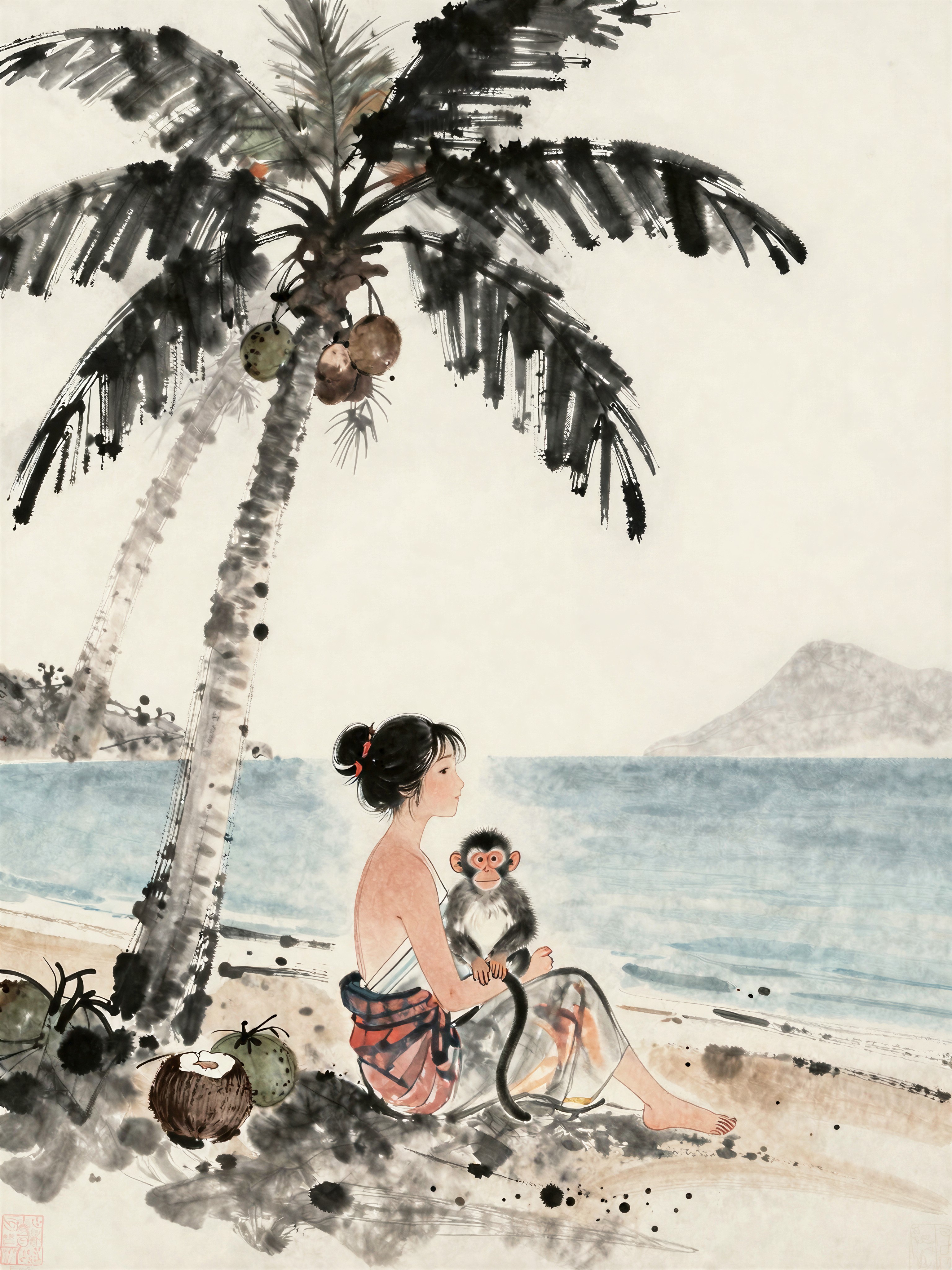
The monkey in the woman's arms is almost secondary to the negative space that defines this image — the way the palm fronds curve around her, the mist that evaporates before reaching the sea, the way the crimson in the fabric glows like a secret. Z-Image Turbo doesn't just render the subject; it carves the silence around them.
The sumi-e ink wash style becomes the subject itself here — the brushstrokes are visible in the way the woman's hair flows, the way the coconuts cling to the tree like brush marks. The muted earth tones with crimson accents create a tension between decay and beauty, a perfect match for wabi-sabi. Even the sea is a negative space, a mirror for the sky rather than a feature.
For Art Directors and Cultural Storytellers
This prompt is tailor-made for creating meditative book covers, spiritual art prints, or mindfulness app backgrounds. The absence of modern elements makes it ideal for historical fiction or fantasy worlds rooted in Japanese aesthetics.
Use a 16:9 aspect ratio to let the ocean breathe horizontally. A 3:4 crop would emphasize the subject but compress the mist and sea. Avoid vertical compositions — they'd make the negative space feel cramped.
Optimal Settings for Z-Image Turbo — Balancing Photorealism and Style
Z-Image Turbo's strength in photorealism means the sumi-e style needs careful guidance. Use cfg_scale between 3.0–3.5 to maintain the ink wash texture without losing the model's sharpness.
- CFG / Guidance:
3.0–3.5— preserves the sumi-e brushwork while keeping the scene coherent - Steps: 20–30 for full detail; 12 steps for quick previews of the composition
- Resolution:
1664×928(16:9) — ideal for capturing the mist and ocean depth
At cfg 3.2 and 25 steps, Z-Image Turbo renders the ink wash texture as deliberate brushstrokes rather than texture noise — the sumi-e style becomes a visual language in its own right.
Five Variations to Explore the Sumi-e Aesthetic
5 Targeted Variations for This Prompt
- Change the subject: Replace "young woman" with "elderly man" — the wabi-sabi mood shifts from youthful serenity to quiet wisdom
- Alter the animal: Replace "monkey" with "crane" — introduces a symbol of longevity and adds more symbolic weight to the scene
- Introduce motion: Add "mist swirling in the air, soft breeze" — keeps the meditative mood but adds gentle dynamism
- Shift the color palette: Change "muted earth tones" to "indigo and gold" — transforms the wabi-sabi into something more ceremonial and mystical
- Expand the setting: Add "ancient shrine in the distance" — introduces a cultural context without disrupting the minimalist composition
Two Prompts Ready to Generate
Apply two of the variations above directly — both are tuned for Z-Image Turbo at the settings recommended above.
Variation: Elderly man with crane — shifts the subject to a wiser figure while keeping the minimalist composition
An elderly man on a deserted tropical island, holding a crane in his arms. Palm trees and coconuts nearby, calm sea in the background. Japanese aesthetics style: sumi-e ink wash painting, minimalist composition, flowing lines, wabi-sabi atmosphere, muted earth tones with subtle hints of crimson. Negative space, ma (the space between things), meditative stillness, ancient and eternal mood. Soft mist, tranquil ocean, no modern elements.
Variation: Indigo and gold palette — transforms the color scheme to create a more ceremonial atmosphere
A native young woman on a deserted tropical island, holding a small monkey in her arms. Palm trees and coconuts nearby, calm sea in the background. Japanese aesthetics style: sumi-e ink wash painting, minimalist composition, flowing lines, wabi-sabi atmosphere, indigo and gold tones with subtle hints of crimson. Negative space, ma (the space between things), meditative stillness, ancient and eternal mood. Soft mist, tranquil ocean, no modern elements.
More Japanese Aesthetic Prompts in This Direction
Other prompts in this category explore similar themes of stillness and cultural depth through different visual lenses: